
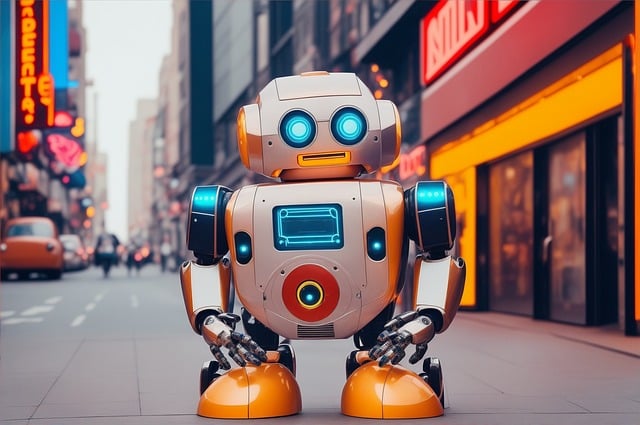
Artificial intelligence (AI) technology has been rapidly advancing in recent years, and its potential for transforming various industries is becoming increasingly evident. From healthcare to finance, AI is paving the way for innovative solutions that are revolutionizing the way we live and work. In this article, we will explore the various applications of AI technology and how it is shaping the future of different industries.
Section 1: The Rise of AI Technology
The concept of AI has been around for decades, but it is only in recent years that we have seen significant advancements in this field. With the rise of big data and the development of powerful computing systems, AI has become more accessible and has found its way into various industries. AI technology involves the use of algorithms and machine learning to analyze and interpret data, enabling computers to perform tasks that typically require human intelligence.
One of the primary drivers of AI technology is its ability to process vast amounts of data at an unprecedented speed. This has opened up a world of possibilities for industries that rely heavily on data analysis, such as healthcare and finance. With AI, these industries can now make data-driven decisions in real-time, leading to improved efficiency and accuracy.
Section 2: Applications of AI in Healthcare
The healthcare industry is one of the most promising areas for the application of AI technology. With the increasing demand for quality healthcare services, AI has the potential to transform the way healthcare is delivered. One of the key areas where AI is making a significant impact is in medical diagnosis.
AI-powered systems can analyze medical images such as X-rays, MRIs, and CT scans to identify abnormalities and assist doctors in making accurate diagnoses. This not only speeds up the diagnosis process but also reduces the chances of human error. AI technology is also being used to develop personalized treatment plans for patients based on their medical history and genetic data.
Another area where AI is being utilized in healthcare is in drug discovery and development. Traditional drug discovery methods are time-consuming and costly, but with AI, scientists can analyze vast amounts of data and identify potential drug candidates in a fraction of the time. This has the potential to accelerate the development of new treatments and medications, ultimately improving patient outcomes.
Section 3: AI in Finance and Business
The finance industry is another sector that has been greatly impacted by AI technology. With the rise of online banking and e-commerce, there is an abundance of financial data that needs to be analyzed and processed. This is where AI comes in, with its ability to analyze large datasets and identify patterns and trends that can help businesses make informed decisions.
AI-powered chatbots are also being used in the finance industry to improve customer service. These chatbots can handle routine inquiries and transactions, freeing up human employees to focus on more complex tasks. This not only improves efficiency but also reduces costs for businesses.
Moreover, AI technology is also being used in fraud detection and prevention. With the rise of online transactions, fraud has become a significant concern for businesses. AI algorithms can analyze data in real-time and identify suspicious transactions, helping businesses prevent financial losses.
Section 4: Challenges and Future of AI Technology
While AI technology has shown immense potential in various industries, there are also challenges that need to be addressed. One of the main concerns is the ethical implications of AI, particularly in areas such as healthcare. As AI systems become more advanced, there is a risk of bias and discrimination in decision-making processes. It is crucial for companies and organizations to ensure that their AI systems are developed and used ethically and responsibly.
Another challenge is the potential impact of AI on the job market. As AI technology continues to advance, there is a fear that it may replace human workers in certain industries. However, experts believe that AI will create more jobs than it eliminates, as it will require a skilled workforce to develop and maintain these systems.
Looking ahead, the future of AI technology is promising. With ongoing research and development, we can expect to see even more innovative applications of AI in various industries. From self-driving cars to virtual assistants, AI is set to transform the way we live and work.
In conclusion, AI technology is paving the way for innovative solutions in various industries, from healthcare to finance. Its ability to analyze and interpret vast amounts of data is revolutionizing the way businesses operate, leading to improved efficiency and accuracy. While there are challenges that need to be addressed, the potential of AI to transform industries and improve our lives is undeniable. As we continue to push the boundaries of AI technology, we can look forward to a future where intelligent machines work alongside humans to create a better world.
